Start with the business you are considering
Record the business name and the person you are speaking with, then use the appropriate independent channels to check important details. The FTC recommends confirming licensing with state or county government where applicable and asking for proof of insurance. Requirements depend on location and work, so verify the relevant category rather than assuming one badge covers every service.
Keep your checks with the exact business and project involved. A similar trading name, a photograph of a certificate or a general claim of experience is not the same as confirming the information that matters to your job. If a detail cannot be established, make it an open question instead of silently treating it as verified.
Ask about comparable work
Describe the purpose of your project and ask about experience with a comparable type of task. A large picture gallery may show a range of work without explaining who carried it out, what part the business handled or how closely it relates to your request. Ask for examples that help you understand the proposed responsibilities.
If references are provided, decide what you want to learn before contacting them. Questions about the description of the work, communication and how changes were handled can be more useful than asking for a general approval. Follow your own privacy preferences when sharing project information and keep notes factual, including what you have not independently checked.
Look for a clear way to discuss the proposal
Notice whether the business answers practical questions in understandable terms. You should be able to identify what it proposes to assess or do, what remains undecided and how the next step would be agreed. A confident explanation and a professional-looking website can support a conversation, but they do not replace the information needed to understand the work.
Make room to review documents without pressure. The FTC identifies pressure for an immediate decision and demands for full payment in advance among warning signs of home improvement scams. For location-specific questions or help with a business concern, the USAGov directory can point you toward your state consumer protection office. This page does not determine the legal status of an agreement.
Keep your checks with the project record
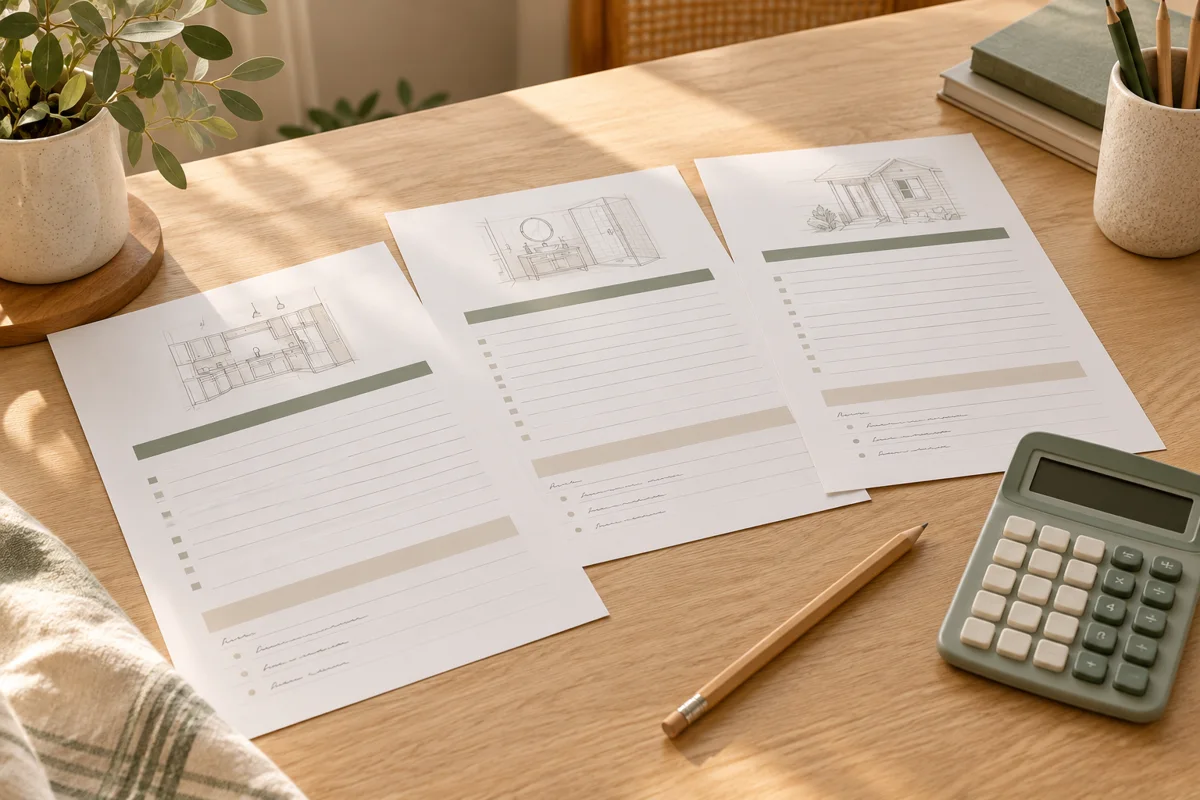
Use a simple record with a date, the source checked, what it confirmed and the questions left open. Keep it alongside the brief, written proposal and any later changes. This makes it easier to distinguish an initial impression from a detail that has actually been established. Update the record when the business or scope changes.
Choose and contact providers yourself. Useful Spaces does not run background checks, maintain an approved contractor network or endorse a business because it is mentioned in your notes. The project planner collects a purpose, timing preference and non-sensitive planning details locally. Use that brief to prepare a better conversation, then make the checks appropriate to the actual work and location.