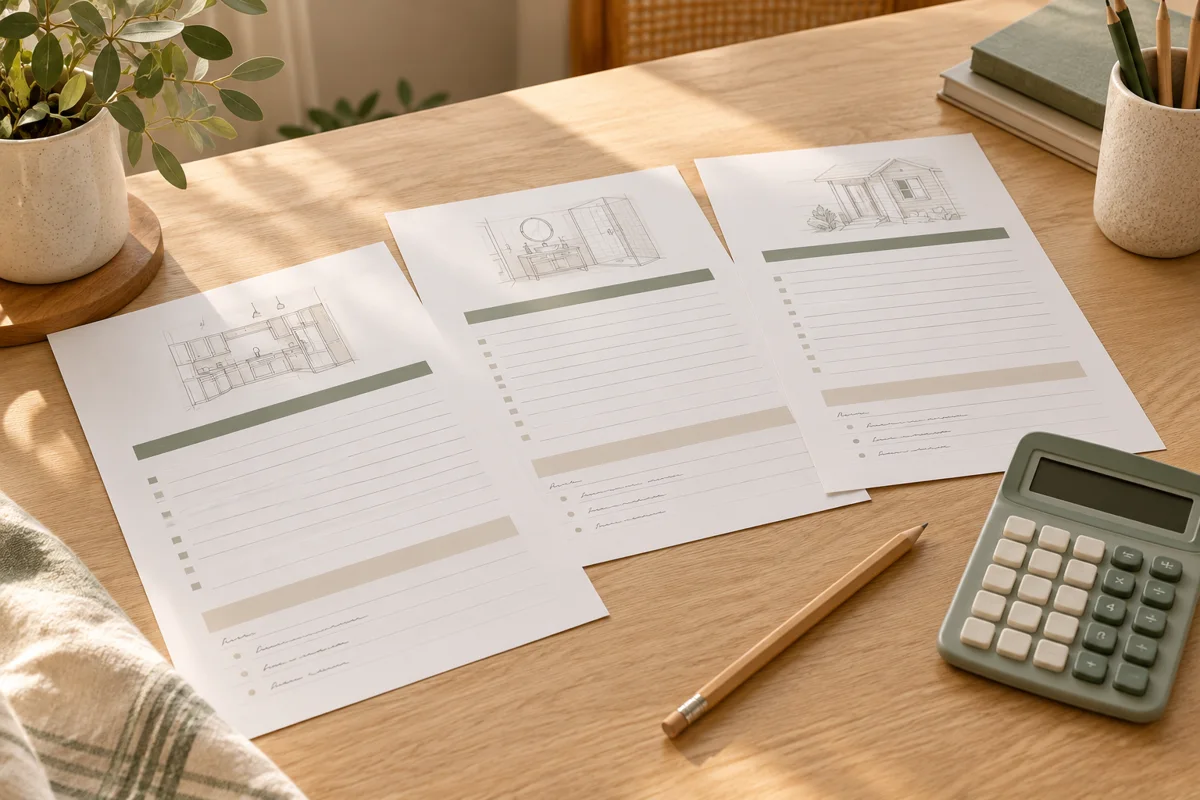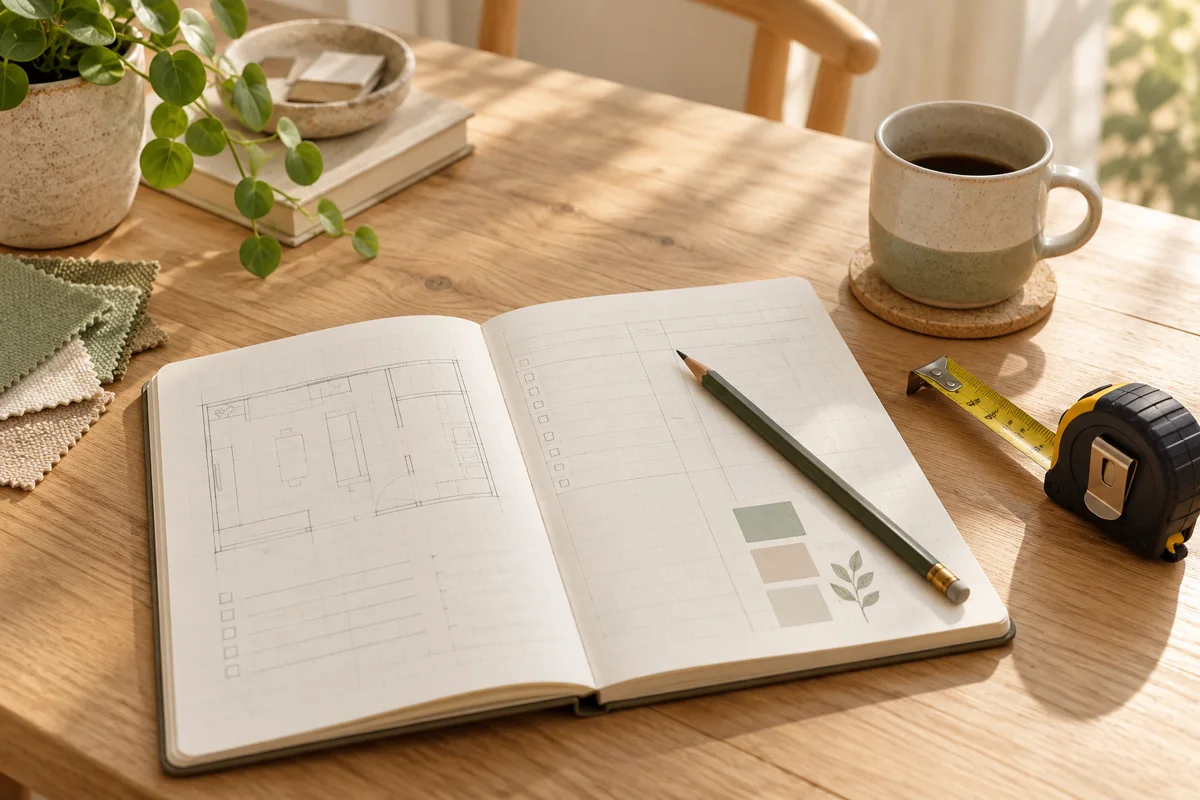
Start with one clear purpose
A useful brief tells another person what you want to discuss without pretending to have solved the job. Begin with a sentence about the outcome: understand an observation, plan a replacement or improve how a space is used. “Discuss replacing the kitchen tap” communicates a different question from “redesign the kitchen.” A precise opening leaves less room for a conversation to drift.
Choose the service category that is closest to the work, then describe the purpose in ordinary language. If more than one trade may be involved, say so in the notes instead of selecting a technical answer you are unsure about. The brief is a starting point for a discussion with a provider, not a diagnosis or a specification that it must accept.
Keep observations separate from conclusions
Write what you know, how you know it and what remains a question. For a room project, that might mean approximate measurements from your own sketch, a product model from an existing document and a layout preference. For a service visit, it might be where you noticed a change and when it happens. Mark uncertain information explicitly.
An example note could say: “Existing unit is staying; new cabinet size still to be confirmed; discuss whether the layout can support the intended use.” That is easier to review than a long unlabelled list of ideas. Keep the original source of a measurement or product detail in your own project file so that it can be checked later.
Describe timing without promising a booking
Choose a timing preference that reflects your plans: gathering information, considering work soon or planning for later. Add a genuine dependency if one exists, such as a delivery you have already arranged. Distinguish a preference from an agreed appointment. Availability and the sequence of work need to be discussed directly with the provider you choose.
If the situation could be urgent or hazardous, use appropriate local help rather than treating a planner as a way to request a response. This tool does not monitor entries or contact anyone. Keep personal contact details, addresses, access codes and sensitive information out of the planning fields; they are not needed to organize a project’s purpose and questions.
Review the brief before sharing it yourself
Read the generated text as though someone else were seeing the project for the first time. Remove assumptions that sound like confirmed facts. Check the service category, purpose, timing preference and optional measurements or notes. A shorter brief with clear questions can be more useful than a detailed story that hides the decision you want to discuss.
Copy or print the brief for your own use, then choose whom to contact separately. Keep the provider’s response, written proposal and subsequent revisions with it. Useful Spaces organizes your words in your browser and does not submit a lead or arrange work. The value is a reusable record that helps each conversation begin with the same information.