Write the outcome before the shopping list
Start with what should work better in the home. A kitchen might need clearer preparation space, a bathroom might need a more usable arrangement, or a room might need to support another activity. Describe that outcome before listing cabinets, fittings and finishes. It gives the discussion a purpose without assuming that a particular product or building change is the answer.
Separate essential outcomes from preferences. For example, keeping an existing appliance may be a firm constraint while changing a finish may be optional. Keep a short explanation beside each important choice. This makes it easier to revisit a proposal without forgetting why an item was included or treating every early idea as a fixed requirement.
Map the room and the related work
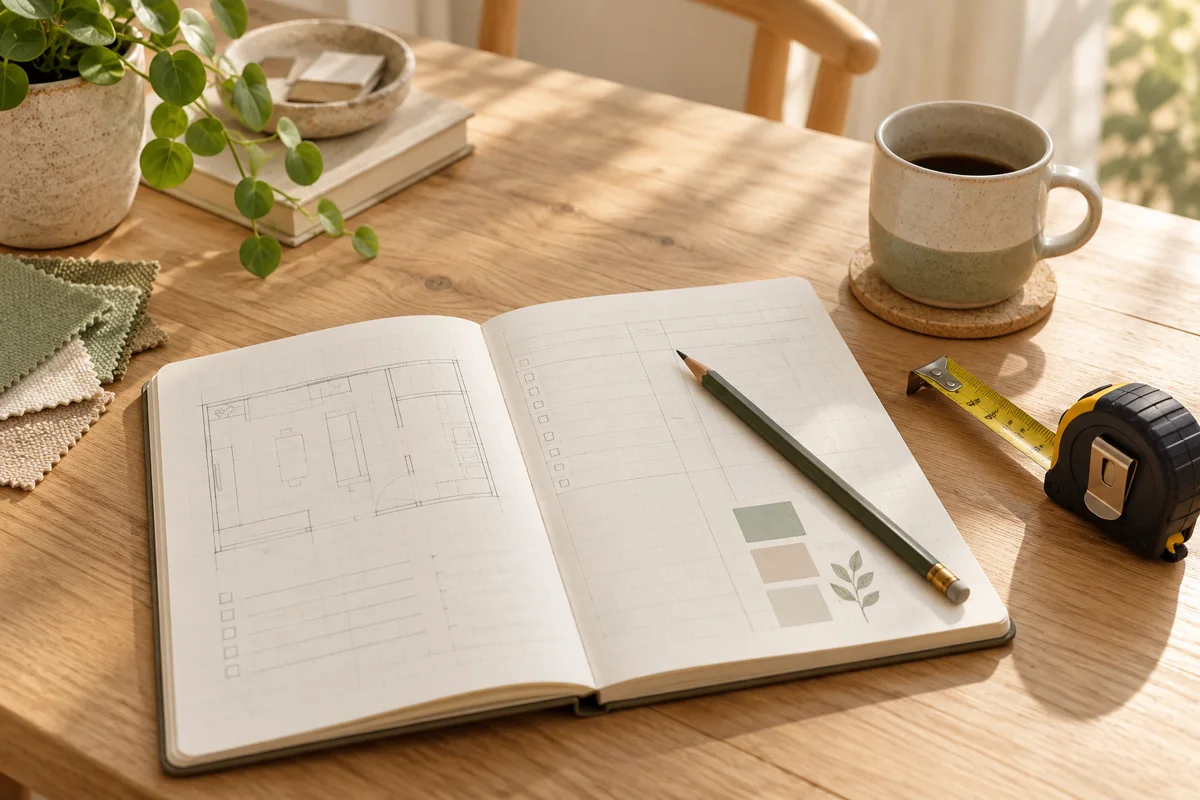
Collect measurements from the actual space and identify fixed features such as doors, windows and built-in elements. Label measurements that need confirmation. A scale sketch can support a conversation, but it cannot establish structural capacity, accessibility, required clearances or permission to alter a building. Ask the responsible professional about decisions that depend on those matters.
Think about the work surrounding the visible result. A new arrangement may involve removal, disposal, changes to services, surfaces and making good. List those questions without assigning responsibility in advance. Keep a furniture purchase separate from installation work until the provider’s proposal explains how the pieces fit together and who is expected to handle each part.
Organize choices before comparing proposals
Prepare one version of the brief for the people you choose to approach. Describe the intended result, known constraints and unresolved options in consistent terms. When an option changes, note that it is a revision. Comparing a basic refresh with a substantial layout change as though they were the same job makes the total prices difficult to interpret.
Use official consumer guidance when checking a business and reviewing a proposed agreement. Requirements can vary with location and type of work, so find the relevant local authority or consumer office for questions that need an official answer. Useful Spaces provides a planning framework, not a substitute for local rules or a project-specific professional assessment.
Keep the plan useful while decisions change
Build the brief around the next conversation rather than trying to solve the whole project at once. An initial meeting may identify measurements, product information or further assessments that are needed before a detailed proposal is possible. Add those items to the record and identify who will supply them. An unanswered question is useful information when it is clearly labelled.
The project planner can turn your purpose, preferred timing and notes into a document you copy or print yourself. The room-fit calculator offers a separate rectangle comparison for a furniture idea. Neither tool submits a service request or approves a design. Keep the final proposal, responsibilities and any agreed changes with your own project records.